Hobart Baptist Tabernacle
Hobart, Tasmania
In the annals of ecclesiastical history, a significant milestone unfolded on the 7th October 1883, marked by the commencement of services within the Exhibition building situated on...
- Denomination
- Baptist
- Region
- South
- Year Built
- 1884
- Architectural Style
- Church
- Heritage Status
- Heritage listed
Overview
In the annals of ecclesiastical history, a significant milestone unfolded on the 7th October 1883, marked by the commencement of services within the Exhibition building situated on Macquarie Street, a site now venerably occupied by the present City Hall. Secured under a rental agreement with the Hobart Corporation, the premises were acquired for a modest sum of 50 shillings per week, signifying a tangible commitment to fostering spiritual communion within the burgeoning urban landscape.
However, the auspicious beginning was soon overshadowed by logistical challenges and municipal exigencies. The cordial arrangement with the Hobart Corporation faltered as rental fees doubled, compelling the congregation to confront the unwelcome prospect of displacement. The abrupt eviction, precipitated by the Mayor's decision to repurpose the premises for the Juvenile Ball, culminated in the ignominious sight of church seats abandoned on the street, emblematic of the transient nature of temporal arrangements amidst the ebb and flow of civic priorities.
Undeterred by adversity, the embryonic congregation of the Hobart Baptist Church forged ahead, navigating the tempestuous seas of uncertainty with unwavering resolve. It was within the intimate confines of Dr. Benjafield's dining room at his residence, The Willows, that the seminal act of church formation transpired on the 20th February 1884. Mr. William Gibson senior, in a poignant testament to the collective vision, articulated the imperative need to procure suitable land for the establishment of a permanent spiritual sanctuary.
Fortune smiled upon their endeavors as an opportunity emerged to acquire a parcel of land nestled at the apex of Elizabeth Street from Mr. Thomas Mather. In a transaction steeped in fiduciary significance, the congregation secured the plot along with any existing edifices thereon for the princely sum of £900. Additionally, an allocation of £50 was earmarked for the foundational groundwork of a prospective schoolroom, emblematic of the holistic vision underpinning the church's aspirations for community enrichment.
The transaction, consummated with a payment of £950 to Mr. Mather, exemplified the ethos of reciprocal beneficence as Mr. Mather, in an act of magnanimity, reinvested £50 towards the designated purpose of the schoolroom's construction. Thus, amidst the flux of urban development and the ever-shifting currents of municipal exigencies, the foundation stones of the Hobart Baptist Church were laid, poised to endure as enduring bastions of spiritual solace and communal enrichment.
The Constitution and Rules of the Hobart Baptist Church were as follows:
We shall always welcome to the Lord’s Table the members of other Christian Churches, and all persons of whose Christianity we are satisfied.
In the chronicles of the Hobart Baptist Church's early history, the quest for suitable premises to conduct Sunday services proved to be a formidable challenge. Despite earnest entreaties, requests to utilize alternative buildings for religious gatherings were met with resolute refusals. In this climate of uncertainty, a glimmer of hope emerged when the Temperance Alliance rooms in Macquarie Street extended the hospitality of their space for a limited number of meetings.
Guided by the sagacious counsel of Dr. Benjafield, the congregation embarked upon a pragmatic solution: the erection of a temporary structure to serve as a provisional sanctuary until the completion of the envisioned schoolroom. This makeshift edifice, constructed at a modest cost, bore the hallmarks of its impermanence, earning the whimsical sobriquet of a 'shedifice' from one wry minister. Indeed, reports of inclement weather wreaking havoc upon the humble structure abounded, with gusts of wind rattling the iron roof and raindrops providing an unwelcome accompaniment to the proceedings, prompting resourceful congregants to seek refuge beneath their umbrellas.
The pivotal moment arrived on the 5th of November 1884, with the laying of the foundation stone for the eagerly anticipated schoolroom. Spanning dimensions of 50 feet by 40 feet, and boasting a height of 14 feet, the structure was envisioned to provide accommodation for a congregation of up to 400 individuals, underscoring the ambitious scope of the church's aspirations for community engagement and spiritual enrichment.
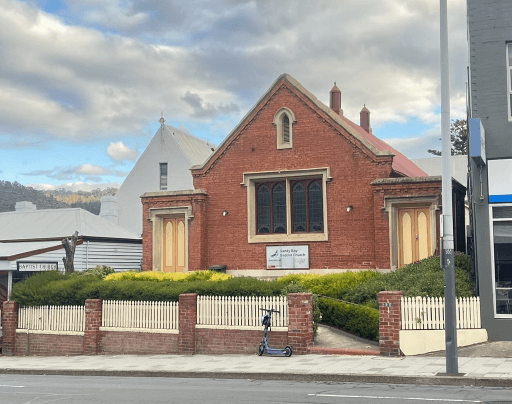
As the year unfolded, the Hobart Mercury bore witness to the unfolding narrative of the church's evolution. On the 21st of March 1885, a notice appeared in its columns, heralding a new chapter in the congregation's journey, emblematic of their steadfast commitment to realizing their collective vision.
Hobart Tabernacle Schoolroom: Those who complained of the temporary Tabernacle in Elizabeth St., as an eyesore, will be pleased with the neat edifice that is now almost completed on the ground …
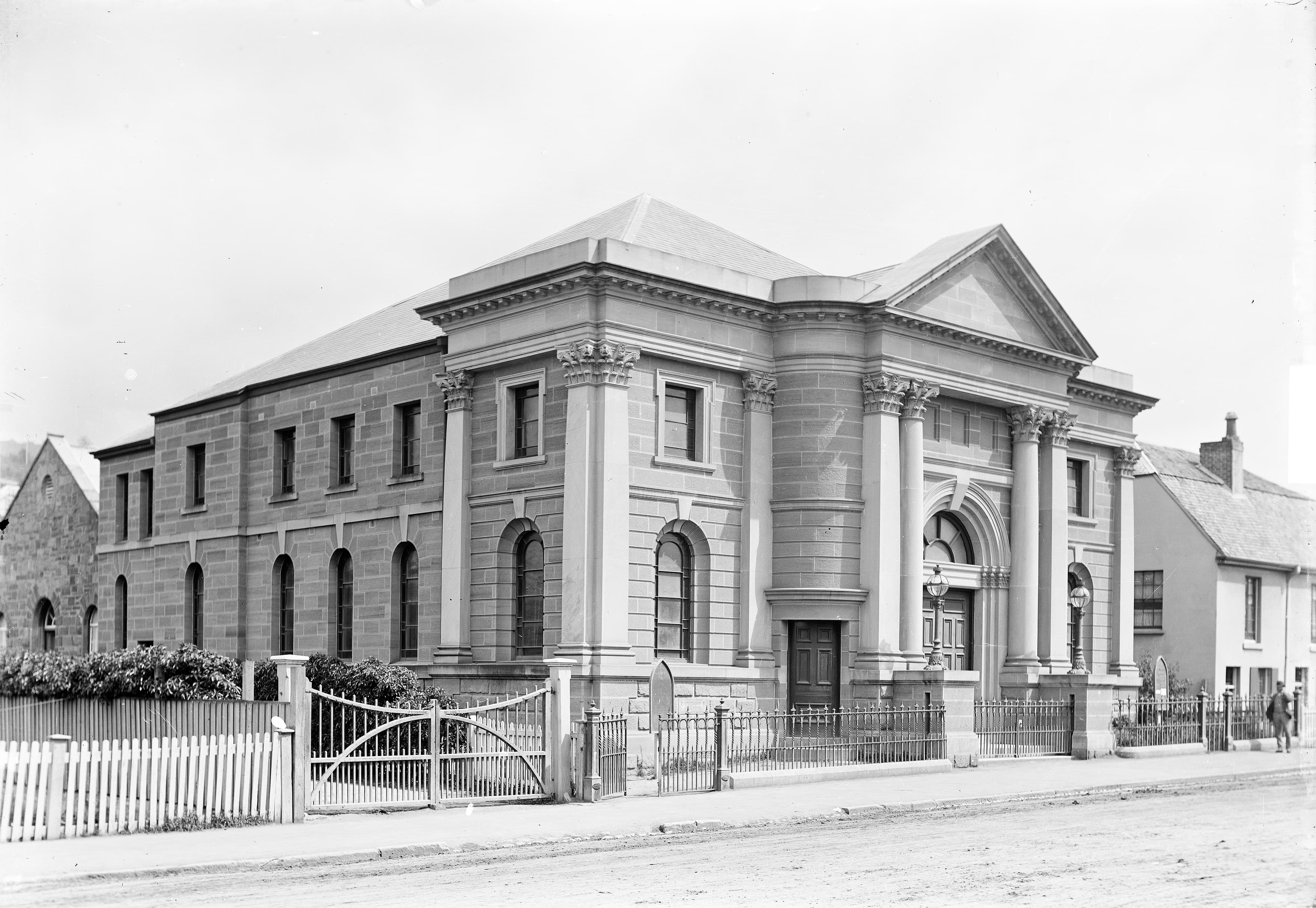
In the history of the Hobart Baptist Church's architectural evolution, the genesis of the grand Tabernacle heralded a transformative chapter in its storied history. Dr. Benjafield, propelled by a quest for architectural inspiration, embarked upon an overseas endeavor, securing plans for the new Tabernacle from a Baptist Church pastor in Stockport, England. These plans, distinguished by their grandeur and modernity, held the promise of a monumental architectural vision, albeit one requiring adaptation to the local landscape.
With unwavering determination, Dr. Benjafield entrusted the plans to the discerning eye of William Gibson, tasking him with the formidable challenge of orchestrating their integration into the Hobart terrain. In a pivotal collaboration, architect George Fagg was enlisted to navigate the complexities of this architectural translation, culminating in the creation of a design that endures as the physical manifestation of the Tabernacle today.
The symbolic gesture of William Gibson's financial contribution, accompanied by a cheque amounting to £1000 towards the building fund, underscored the collective commitment to realizing this visionary project. His accompanying missive, imbued with a sense of pragmatic optimism, affirmed that while the funds may not suffice to construct a palace, they were nonetheless destined to yield an edifice surpassing the humble stature of a mere barn.
The mantle of construction was assumed by the esteemed Stabb brothers, entrusted with the realization of this monumental vision. On the auspicious date of 5th October 1887, witnessed by a throng of 300 individuals, the foundation stone was ceremonially laid. Amidst the solemn ritual, a vessel containing contemporary newspapers and a parchment scroll was interred beneath the stone by the hand of Mr. Samuel B. Pitt. In a gesture laden with symbolic import, Mary Ann Gibson was presented with a silver trowel by Mr. Robert McCullough, symbolizing the collective endeavor of the community in laying the cornerstone of the Tabernacle.
The culmination of years of collective endeavor unfurled on the 20th January 1889, as the majestic Baptist Tabernacle opened its doors to the public for the first time. Reverend Samuel Chapman, hailing from the Collins Street Baptist Church in Melbourne, graced the auspicious occasion as the guest speaker, ushering in a new era of spiritual significance and communal cohesion within the hallowed confines of the Tabernacle.
History
1883-10-07
Services began in the Exhibition building on Macquarie Street
opened1884
Land at the apex of Elizabeth Street was purchased from Mr. Thomas Mather
1884-11-05
Foundation stone for the schoolroom was laid
built1884-02-20
Hobart Baptist Church was formed at Dr. Benjafield's residence, The Willows
founded1885-03-21
Notice about the Hobart Tabernacle Schoolroom appeared in the Hobart Mercury
1887-10-05
Foundation stone for the new Tabernacle was laid
built1889-01-20
Baptist Tabernacle opened to the public
opened
Gallery
References
- The Tasmanian Mail newspaper, 13 Nov 1919, p. 17, photographer possibly W WilliamsonTasmanian Pictorial Church Index
- Laurence F Rowston, One Hundred Year of Witness : a history of the Hobart Baptist Church 1884-1984, 1984, HobartTasmanian Pictorial Church Index
Links
- The Hobart Baptist Church (1934, April 23). The Mercury (Hobart, Tas.: 1860 - 1954), p. 3. Retrieved October 02, 20193
Tasmanian Pictorial Church Index
- Tasmanian Archives, NS1013-1-145, E R Pretyman (NS1013)
Tasmanian Pictorial Church Index
Services
Not recorded
Open
Not recorded
Address
284 Elizabeth Street, Hobart TAS 7000
Contact
Not recorded
Accessibility
Not recorded