Scots Memorial Church
Hobart, Tasmania
In the history of ecclesiastical history in Tasmania, the origins of Scots Church trace back to its nascent inception as St. Andrew's Church Hall, nestled within the Bathurst Street locale,...
- Denomination
- Uniting Presbyterian
- Region
- South
- Year Built
- 1834
- Architectural Style
- Church
- Heritage Status
- Heritage listed
Overview
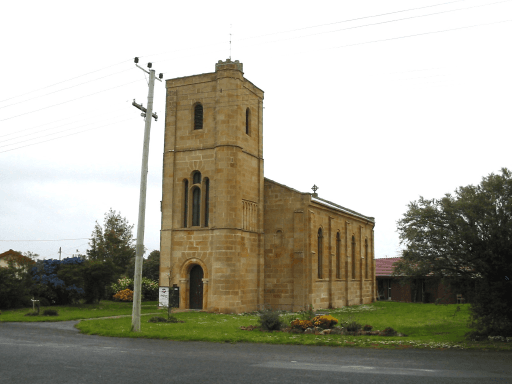
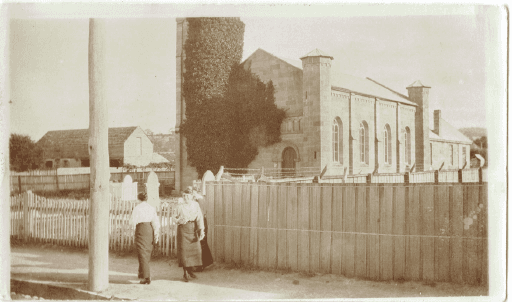
In the history of ecclesiastical history in Tasmania, the origins of Scots Church trace back to its nascent inception as St. Andrew's Church Hall, nestled within the Bathurst Street locale, a pivotal moment occurring in the year 1824. Under the auspices of Lieut-Governor Sorell, a momentous assignment transpired, as land was duly designated for the establishment of the Presbyterian Church, an act emblematic of the colonial administration's recognition of religious diversity and communal cohesion.
The significance of this allocation finds resonance in the archival records of 22nd May 1824, wherein the contours of this momentous decision are delineated. Within the corridors of governance, the penmanship of administrative decree delineates the contours of this historic decree, a tangible testament to the intersection of religious patronage and colonial governance within the burgeoning urban landscape of early Tasmanian society.
I gave considerable aid from the Government to a small Roman Catholic Chapel and to the Presbyterian Chapel now in progress to each of which spacious allotments of ground are assigned, as also to the Wesleyan Church.
As the congregation of Scots Church flourished and swelled in numbers, the imperative for a more capacious meeting space became apparent. This burgeoning demand for expanded accommodations bore testament to the burgeoning vitality of the community and its attendant spiritual needs.
The historical record, as chronicled in the Hobart Town Courier of 11th October 1833, offers a glimpse into this juncture of ecclesiastical and civic development. Within the hallowed chambers of the Legislative Council, the solemn words of Lieut-Governor, echoed through the annals of time, resonating with a sense of foresight and civic stewardship.
I have also included in the estimates for 1833-1834 in equal portions the sum of £1250 towards the erection of a Presbyterian Church for the accommodation of such inhabitants as are in connection with that part of the Protestant church of Great Britain which is by law established in Scotland , as the present building is much too small and in almost every respect ill-adapted for public worship - and the mangers have on behalf of their constituents pledged themselves to apply in raising a more commodious building a sum equal to that afforded by the Government.
The ecclesiastical development in Tasmania, the month of November in the year 1833 marked a pivotal juncture for the burgeoning Scots Church community. In response to the pressing need for architectural expansion, the church's managers issued a call, offering a bounty of £25 for the provision of comprehensive plans and specifications. The envisioned structure was to encompass a spacious gallery and accommodate approximately 800 congregants, all within the confines of a budget not to exceed £2,500. As the deadline for submissions loomed, interested parties were instructed to direct their proposals to Mr. John Walker by the 13th December 1833.
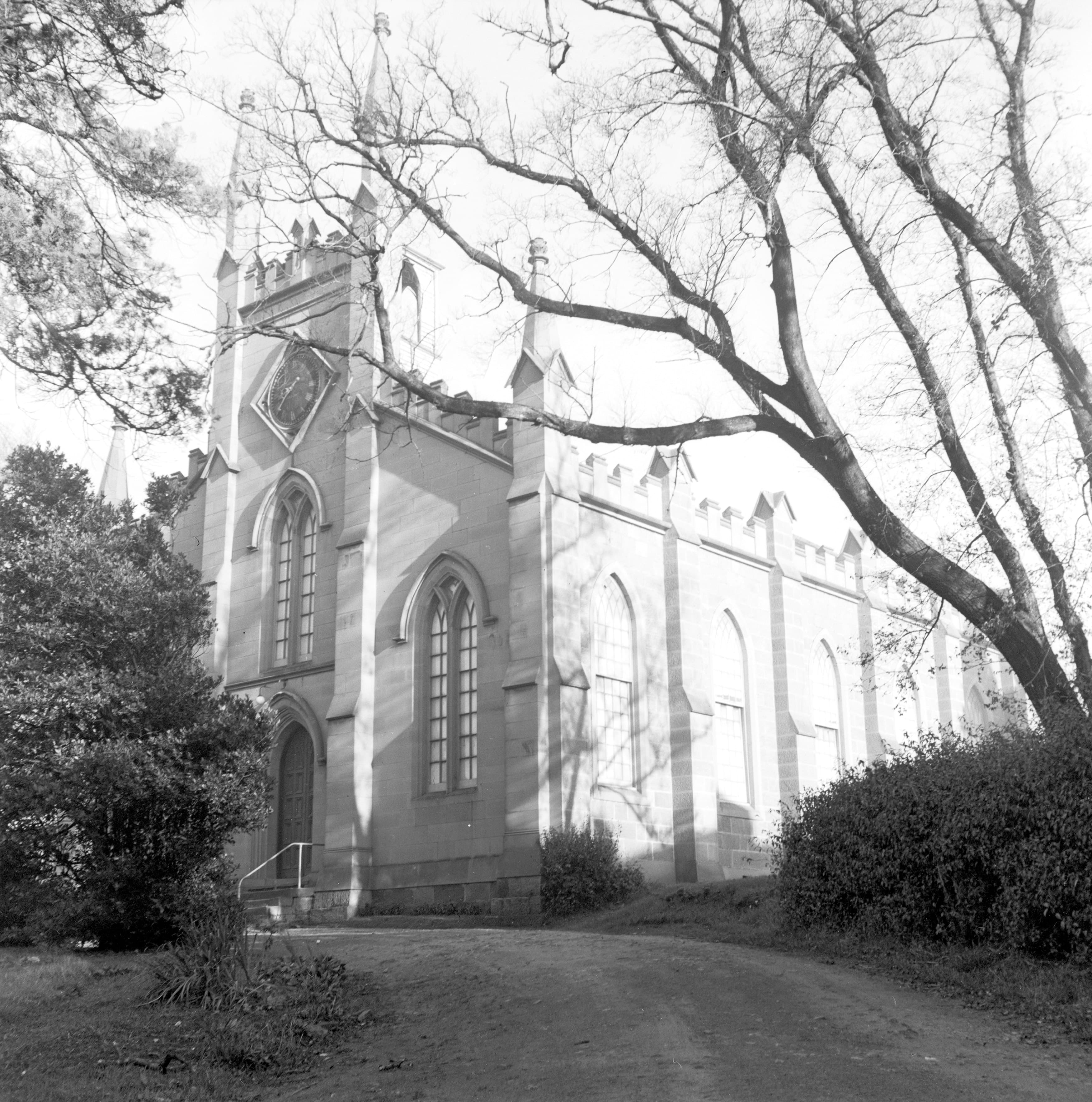
The mantle of architectural stewardship fell upon the shoulders of Mr. John Addison, whose meticulously crafted plans and specifications earned him the coveted commission. Joining forces with esteemed builders Jackson & Addison, the vision for Scots Church began to materialize. Amidst a palpable atmosphere of anticipation, the foundation stone was ceremonially laid on the 25th April 1834, an occasion imbued with symbolic significance.
Beneath the stone lay a humble yet poignant testament to the era's ethos, encapsulated within a can containing a selection of gold and silver coins. Accompanying this cache was a commemorative plaque, bearing an inscription destined to be etched into the annals of history.
HUTUSCE ECCLESIAE
PRIMUM LAPIDEM
POSUIT
VIR ILLE PRAECLARUS
PRAEFECTUS
ANNO SALUTIS MDCCCXXXIV
GUL. IV. REG.
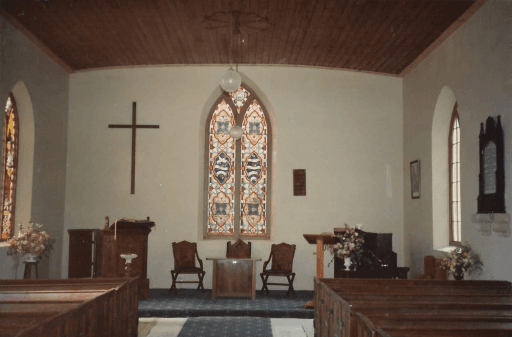
On the auspicious date of 15th November 1835, a momentous occasion unfolded with the inauguration of the new stone church, a symbol of faith and community cohesion in the burgeoning Tasmanian landscape. The reverent atmosphere was punctuated by a sermon delivered by the esteemed Rev. Dr. Lang of Sydney, his words resonating within the newly consecrated sanctuary, imbued with the promise of spiritual sustenance and communal unity.
In a testament to the enduring legacy of ecclesiastical amalgamation, the union of Chalmers Church and St. Andrew's Church precipitated the formation of Scots Church in 1936. This convergence of congregations marked a pivotal chapter in the collective narrative of faith and fellowship, underscoring the ethos of shared purpose and communal solidarity.
In 1977, Scots Church took another transformative step in its journey of congregational evolution. By joining forces with the Congregational Memorial Church located on Brisbane Street, Scots Memorial Church emerged as a beacon of shared heritage and spiritual heritage, a testament to the enduring resilience of faith amidst the currents of change and adaptation.
The significance of Scots Memorial Church transcends its physical edifice, as it is enshrined on the Tasmanian Heritage Register as a testament to its historical, architectural, and cultural importance. In this official designation, the church stands as a tangible embodiment of Tasmania's rich religious heritage, a cherished landmark revered for its enduring contributions to the fabric of Tasmanian society.
Scots Church and Hall are of historic significance because of their ability to demonstrate the principal characteristics of a sandstone Old Colonial Gothic Picturesque domestic building.
History
1824-05-22
Land allocation for the Presbyterian Church recorded in government correspondence
1824
Land was allocated for the Presbyterian Church
foundedNovember 1833
Call issued for plans and specifications for a new church
1833-12-13
Submission deadline for church plans set
1833-1834
Government pledged funding toward a new Presbyterian Church
1834-04-25
Foundation stone laid for the new stone church
built1835-11-15
New stone church inaugurated
opened1936
Scots Church formed through union of Chalmers Church and St. Andrew's Church
founded1977
Scots Memorial Church created by joining with the Congregational Memorial Church
Gallery
References
- Robyn Everist, Churches of Colonial Hobart - A field guide to Hobart's history in 24 buildings, Hobart History Publishing, Hobart, 2018, p.26Tasmanian Pictorial Church Index
- Tasmanian Heritage Register THR ID 6638Tasmanian Pictorial Church Index
- William Charles Morris, Scots Church, Hobart 1823-1965 : a brief history of the Scots Church incorporating the Chalmers' and St Andrew's Churches, Hobart, 1965Tasmanian Pictorial Church Index
Links
- Tasmanian Archives, NS3195/1/635, Jack Thwaites and Family (NG1155)
Tasmanian Pictorial Church Index
- St. Andrew's Presbyterian Church, on Bathurst Street, PH30/1/2978, Tasmanian Archives
Tasmanian Pictorial Church Index
- Scots Church Photo Gallery
Tasmanian Pictorial Church Index
- PROCEEDINGS OF THE LEGISLATIVE COUNCIL OF VAN DIEMEN'S LAND. (1833, October 11). The Hobart Town Courier (Tas.: 1827 - 1839), p. 4. Retrieved August 2, 2022
Tasmanian Pictorial Church Index
- The First Church (now St. Andrew's School Hall) Opened September 1824, NS6192/, Tasmanian Archives1/120
Tasmanian Pictorial Church Index
- Lithograph of St Andrew's Church, Hobart Town (dedicated to Rev John Little by publisher R. V. Hood, Hobart Town), NS3503/1/5,Tasmanian Archives
Tasmanian Pictorial Church Index
- CEREMONY (1834, April 25). The Hobart Town Courier (Tas.: 1827 - 1839), p. 3. Retrieved August 2, 2022
Tasmanian Pictorial Church Index
- THE PRESBYTERIAN CHURCH OF HOBART TOWN. (1836, January 8). The Hobart Town Courier (Tas.: 1827 - 1839), p. 4. Retrieved August 2, 2022
Tasmanian Pictorial Church Index
Services
Still in use
Open
Not recorded
Address
25-29 Bathurst Street, Hobart TAS 7000
Contact
Not recorded
Accessibility
Not recorded