First Anglican Church
Swansea, Tasmania
The origins of Waterloo Point, or Swansea as it is presently known, can be traced back to the year 1821, when European settlers first established their presence in the area. Originally...
- Denomination
- Anglican
- Region
- East Coast
- Year Built
- 1845
- Architectural Style
- Church
- Heritage Status
- Not recorded
Overview
The origins of Waterloo Point, or Swansea as it is presently known, can be traced back to the year 1821, when European settlers first established their presence in the area. Originally referred to as Great Swanport, the locality underwent a nomenclatural transition in 1860, officially adopting the name Glamorgan.
During the mid to late 1820s, the establishment of a military station on the point marked a significant development in the area's history. This station earned its appellation, Waterloo Point, bestowed by Captain George Hibbert, a military officer who had distinguished himself at the Battle of Waterloo.
The religious landscape of the region began to take shape with the arrival of Reverend Joseph Mayson, who assumed the role of the first Minister in the area. Notably, Rev. Mayson's inaugural baptism, that of Elizabeth Amelia Watson on the 20th of March 1839, heralded the commencement of formalized religious services in Swansea. His tenure as Minister extended until 1877, during which he diligently served the community.
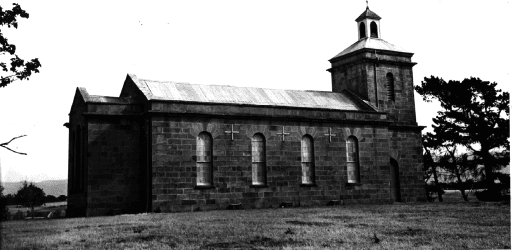
A modest stone edifice emerges as a poignant symbol of early convict-era architecture and communal life. Constructed through the toil of convict laborers, this humble building served a dual purpose, functioning as both a place of worship and a center of learning. The year was 1845 when this structure first graced the landscape, nestled opposite the site that now hosts the Anglican cemetery.
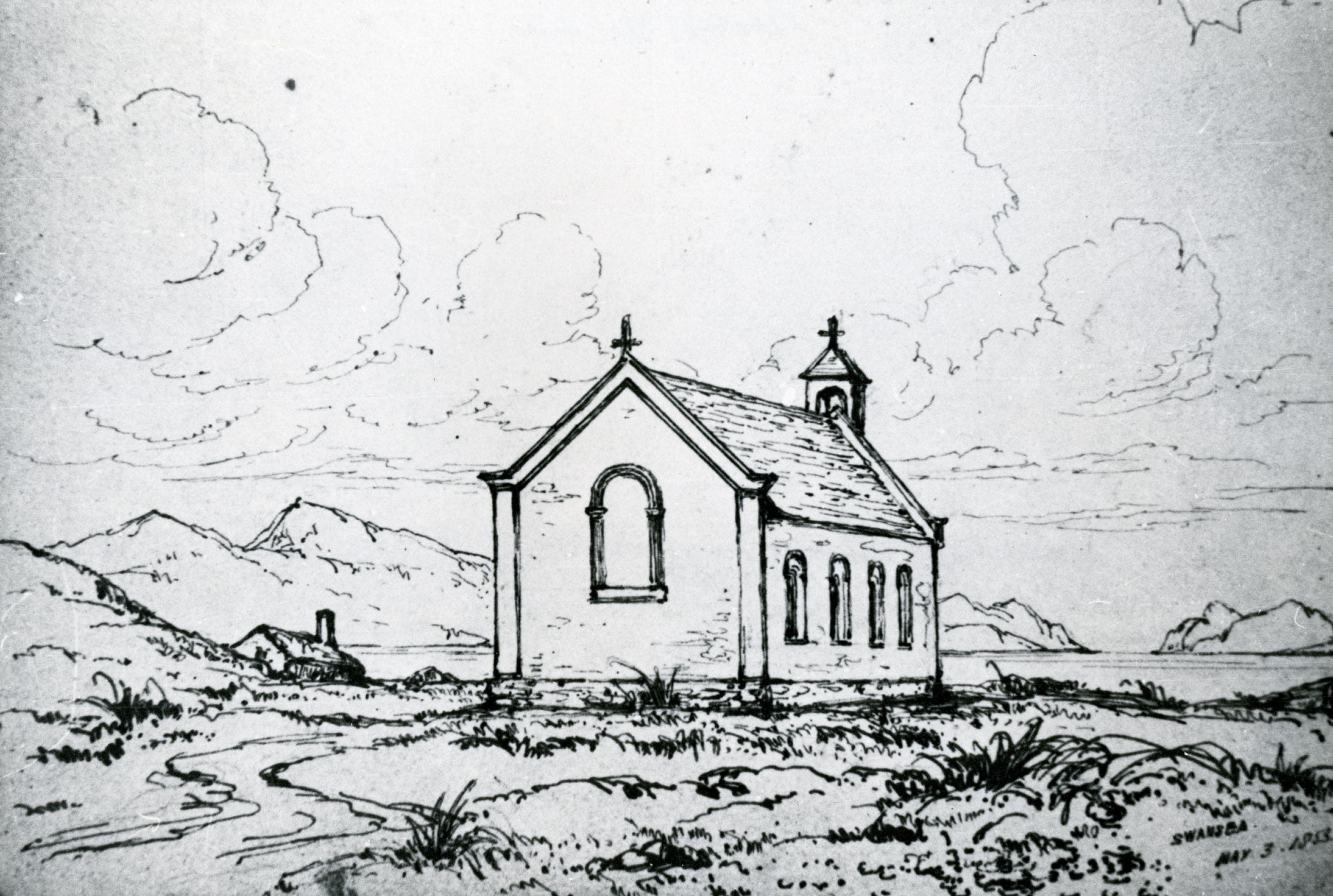
Captured for posterity in the delicate strokes of Fanny Maria Meredith's watercolor, this building stands as a testament to the resilience and resourcefulness of the settlers who inhabited this frontier. Against the backdrop of Tasmania's rugged terrain, its stone walls bore witness to the hopes and aspirations of a burgeoning community striving for spiritual nourishment and educational enlightenment.
Though the years have weathered its stones and the winds of change have swept across the landscape, the memory of this humble structure endures, preserved in the annals of local lore and immortalized in the artistry of Fanny Maria Meredith's evocative depiction.
An early testament to the burgeoning religious community was the construction of a small stone building, erected by convict labor in 1845. This humble structure served a dual purpose, functioning both as a church and a school. Situated opposite the present-day Anglican cemetery, the building provided a focal point for religious and educational endeavors in the burgeoning settlement.
The church, believed to accommodate up to 150 worshippers, boasted cedar pews and a three-decker pulpit, epitomizing the architectural norms of its era. However, by July 1868, structural concerns rendered the building unfit for use, necessitating alternative arrangements for religious gatherings.
By 1881, the old stone building on Waterloo Point had outlived its original purpose and was sold to local builder Mr. Andrew Gemmell. Subsequently, the stone was repurposed in the construction of two small cottages, marking the transition of the historic structure into a new phase of existence.
In the interim, services were conducted in the newly erected School House on Franklin Street, serving as a temporary venue until the construction of the All Saints Church in 1871.
Today, the vestiges of the past are obscured by the sprawling expanse of the Swansea golf course, concealing the physical remnants of bygone eras beneath its verdant landscape.
See also no's 251 & 1184
History
1821
European settlers first established their presence in the area
founded1839-03-20
Rev. Joseph Mayson began serving as first minister and formal religious services commenced
founded1845
Small stone church and school building was constructed by convict labor
built1860
Locality officially adopted the name Glamorgan
renamedJuly 1868
Building was deemed unfit for use
closed1871
Services were conducted in the newly erected School House on Franklin Street
opened1881
Old stone building was sold to local builder Mr. Andrew Gemmell
sold
Gallery
References
- Frederick C Shaw, A Short History of All Saints' Church, Swansea, nd, Telegraph Printery Pty Ltd, pamphletTasmanian Pictorial Church Index
- Notes on church history - Great Swanport and Swansea First Religious Service in District, held in the Glamorgan Spring Bay Historical Society Inc.Tasmanian Pictorial Church Index
- All Saints' Church records held in the Glamorgan Spring Bay Historical Society Inc.Tasmanian Pictorial Church Index
Services
No longer exists
Open
Not recorded
Address
Waterloo Road, Swansea TAS 7190
Contact
Not recorded
Accessibility
Not recorded