Independent Chapel
Kempton, Tasmania
The history of Kempton Congregational Church, erected in 1840, evokes the simplicity and grace of Georgian architecture, serving as a venerable testament to Tasmania's religious heritage....
- Denomination
- Congregational
- Region
- Midlands
- Year Built
- 1840
- Architectural Style
- Church
- Heritage Status
- Heritage listed
Overview
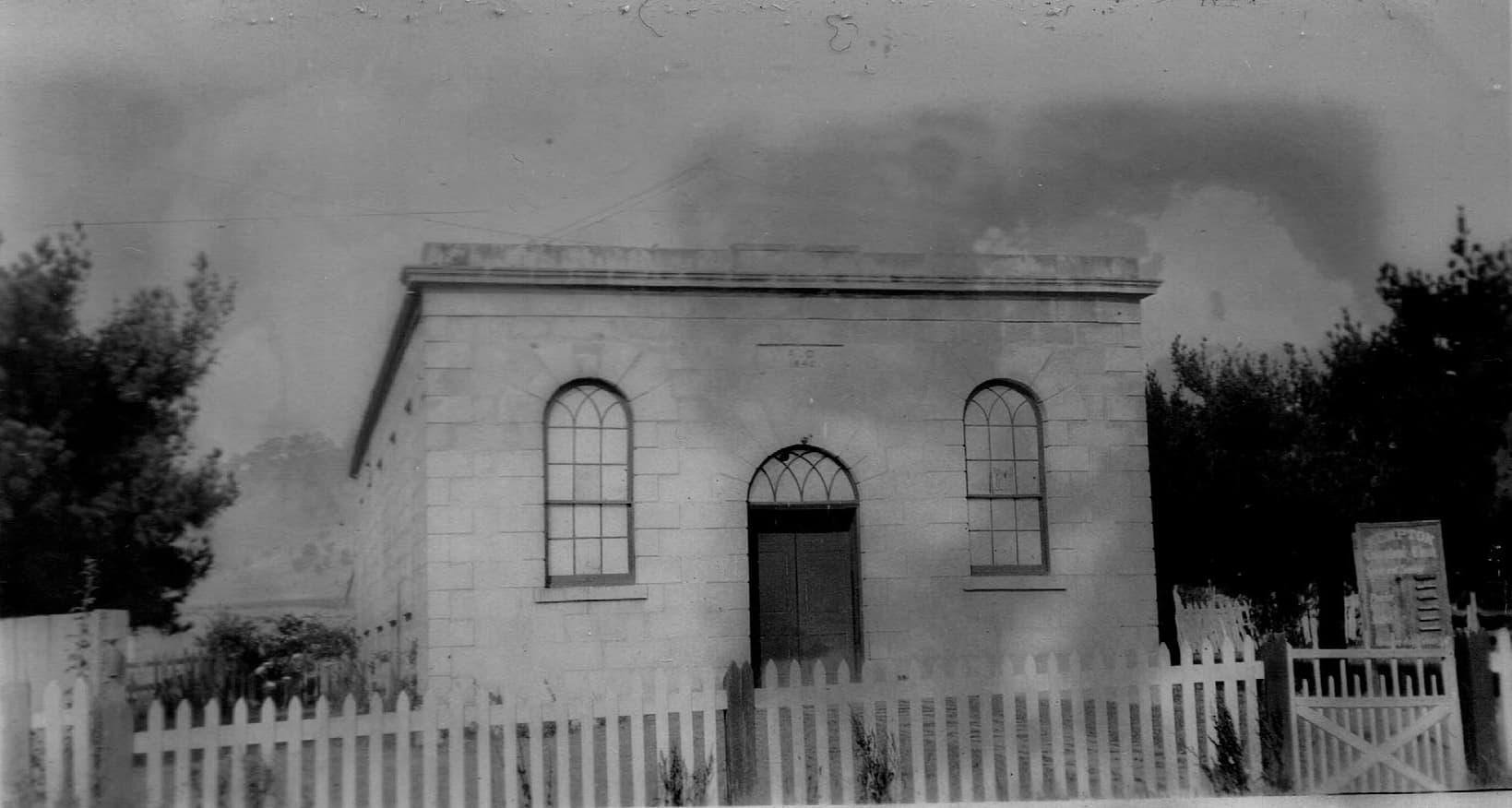
The history of Kempton Congregational Church, erected in 1840, evokes the simplicity and grace of Georgian architecture, serving as a venerable testament to Tasmania's religious heritage. Nestled within its precincts lies an intriguing old cemetery, bearing silent witness to the passage of time and the lives interred within its hallowed grounds.
Kempton boasted a diverse religious landscape, with the Congregational Church standing alongside three other prominent denominations—the Anglican, Catholic, and Presbyterian churches. The Wesleyans, although owning land at Green Pond earmarked for a chapel, never realized their architectural aspirations.
The genesis of the Congregational Church can be traced back to the auspices of the Van Diemen's Land Missionary Society, which oversaw its construction at a cost of £500. A significant milestone occurred on Good Friday, April 17th, 1840, with the ceremonial opening of the 'Green Pond's Congregational chapel' The first services were conducted by Reverends Frederick Miller, Alexander Morrison and Joseph Beazley.
This architectural gem owed its existence to the indefatigable efforts of Reverend Joseph Beazley, a pioneering "bush missionary" who ventured into the district around 1835. Initially conducting services in private residences, Beazley eventually secured the use of a schoolroom, laying the foundation for congregational worship in the area. Settling in Green Ponds in January 1838, Beazley's missionary zeal extended beyond Kempton, fostering the establishment of Congregational chapels in Bagdad, Tea Tree, and Richmond.
In 1847, Reverend Beazley departed for Sydney, where he assumed pastoral duties at the Redfern Congregational pastorate before ultimately returning to England. His enduring legacy endured, with the establishment of a Sabbath school and the expansion of the chapel to incorporate a schoolroom, meeting space, and vestry. Notably, the church played a role in the spiritual lives of 'Canadian Rebels' laboring at the Green Ponds Probation Station in 1840, a testament to its inclusive ethos and community outreach.
The passage of time ushered in a period of restoration in 1970, generously supported by funds commemorating the late Thomas Gorringe. Subsequently, in 1977, the church became part of the Uniting Church before ultimately ceasing operations. Its transformation into a private residence marked the denouement of its ecclesiastical journey, a poignant reminder of its enduring significance within the fabric of Tasmania's religious landscape.
History
circa 1835
Joseph Beazley ventured into the district
January 1838
Joseph Beazley settled in Green Ponds
1840-04-17
Green Pond's Congregational chapel ceremonially opened
opened1840
Congregational Church erected
builtafter 1847
Sabbath school established and chapel expanded to include schoolroom, meeting space and vestry
1970
Church restored with funds commemorating Thomas Gorringe
restored1977
Church became part of the Uniting Church
transferred
Gallery
References
- The Weekly Courier newspaper, 08 Oct 1904, p. 18, photographer John LumsdenTasmanian Pictorial Church Index
Links
- Kempton Church Centenary (1940, March 06). The Mercury (Hobart, Tas.: 1860 - 1954), p. 8. Retrieved October 02, 2019
Tasmanian Pictorial Church Index
- Kempton, Tasmania
Tasmanian Pictorial Church Index
- Tasmanian Archives, NS2937-1-555, John Immig (NG2446)
Tasmanian Pictorial Church Index
- Tasmanian Archives, AB713-1-5588, Mangalore, brownstone hall
Tasmanian Pictorial Church Index
Services
Private residence
Open
Not recorded
Address
54 Main Street, Kempton TAS 7030
Contact
Not recorded
Accessibility
Not recorded