St Andrew's
Launceston, Tasmania
Launceston's religious architecture, St. Andrew's Presbyterian Church emerges as a significant chapter, bearing witness to the evolution of congregational spaces amidst the city's urban...
- Denomination
- Presbyterian
- Region
- North
- Year Built
- Unknown
- Architectural Style
- Church
- Heritage Status
- Heritage listed
Overview
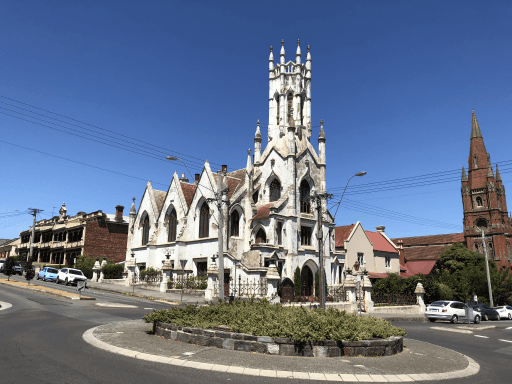
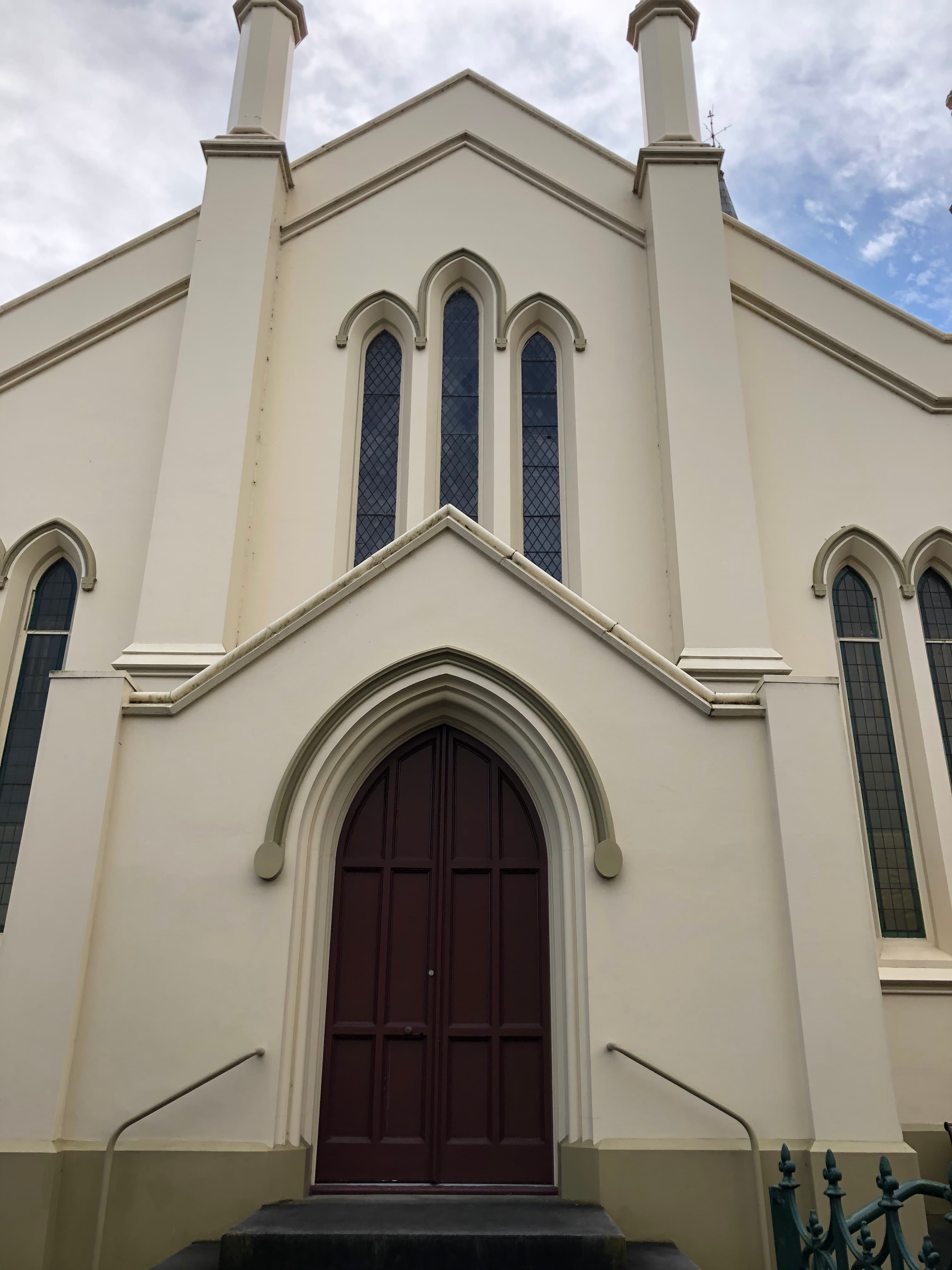
Launceston's religious architecture, St. Andrew's Presbyterian Church emerges as a significant chapter, bearing witness to the evolution of congregational spaces amidst the city's urban fabric.
The genesis of this architectural landmark traces back to the mid-19th century when the burgeoning Scots Presbyterian community found themselves in need of a new sanctuary to accommodate their expanding flock. Outgrowing their modest quarters on Charles Street, the congregation embarked on a quest for an architectural solution, offering a prize for the best church plan capable of housing 700 worshippers within a budget of £3000. Longford-born architect William Henry Clayton's design emerged victorious, though the final structure, completed under the stewardship of church member William Tyson, fell short of its intended capacity, accommodating only 320 souls. Despite this discrepancy, the church was swiftly erected, with construction spanning under 15 months, culminating in its inaugural service in December 1849.
Clayton's architectural prowess extended beyond the confines of St. Andrew's, encompassing notable contributions to Launceston's civic landscape. Notably, he lent his vision to the design of the Mechanic's Institute (1859-60), situated behind St. Andrew's and interfacing with St. John and Cameron Streets. Additionally, Clayton is credited with the original section of the Public Buildings (1858), standing in proximity to the church and embodying his distinct stylistic imprint.
In the dawn of the 1970s, St. Andrew's underwent a transformative expansion, extending towards Cameron Street under the architectural guidance of City Architect William Clennett. The seamless integration of the new wing with the original structure reflects a harmonious fusion of tradition and modernity, preserving the church's architectural legacy while accommodating contemporary needs.
Among its notable features, St. Andrew's boasts a historic bell dating back to 1821, speculated to be of government origin and supplied from London for colonial churches. Despite its antiquity, the bell remains silent, mindful of potential structural implications associated with its motion within the tower.
The musical soul of St. Andrew's resonates from its organ chamber, housing a distinguished instrument with a storied past. The church's second organ, installed in 1922, incorporates pipes ordered by Dr. Valentine of Campbell Town for an organ he endeavored to construct in 1867. This melodic heirloom embodies a lineage of craftsmanship and musical heritage, enriching the spiritual tapestry of St. Andrew's Presbyterian Church for generations to come.
History
1821
Historic bell dates from
December 1849
First service held in the completed church
opened1867
Pipes ordered for Dr. Valentine’s organ project
1922
Second organ installed
the dawn of the 1970s
Church expanded towards Cameron Street
extended
Gallery
References
- The Weekly Courier newspaper, 24 Mar 1906, p. 21Tasmanian Pictorial Church Index
- Ian Boersma, Launceston's historic churches and organs tour, 2021Tasmanian Pictorial Church Index
Links
- The Gardens - Rescued Old Photographs, Tasmania
Tasmanian Pictorial Church Index
- Abbott Album Manuscript, Scotch Church, & Mechanics' Institute / A.A. Novr 1861, State Library of Tasmania
Tasmanian Pictorial Church Index
- Hood, R.V., St. Andrews Church, Launceston, VD Land, lithograph, 1845-55, Allport Library and Museum of Fine Arts, Tasmanian Archive
Tasmanian Pictorial Church Index
- Launceston churches: collection of postcards, State Library of Tasmania
Tasmanian Pictorial Church Index
Services
Still in use
Open
Not recorded
Address
36 St John Street cnr Paterson Street, Launceston TAS 7250
Contact
Not recorded
Accessibility
Not recorded