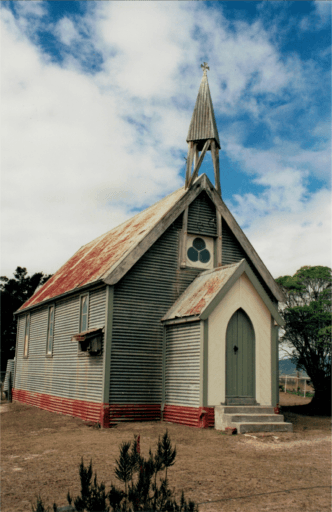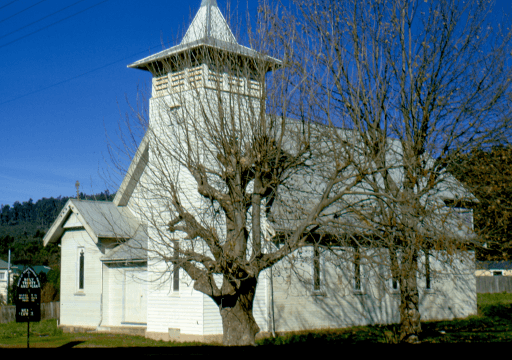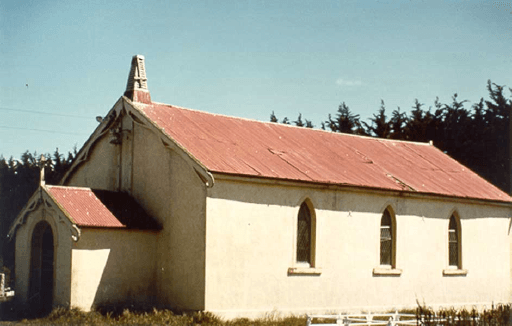
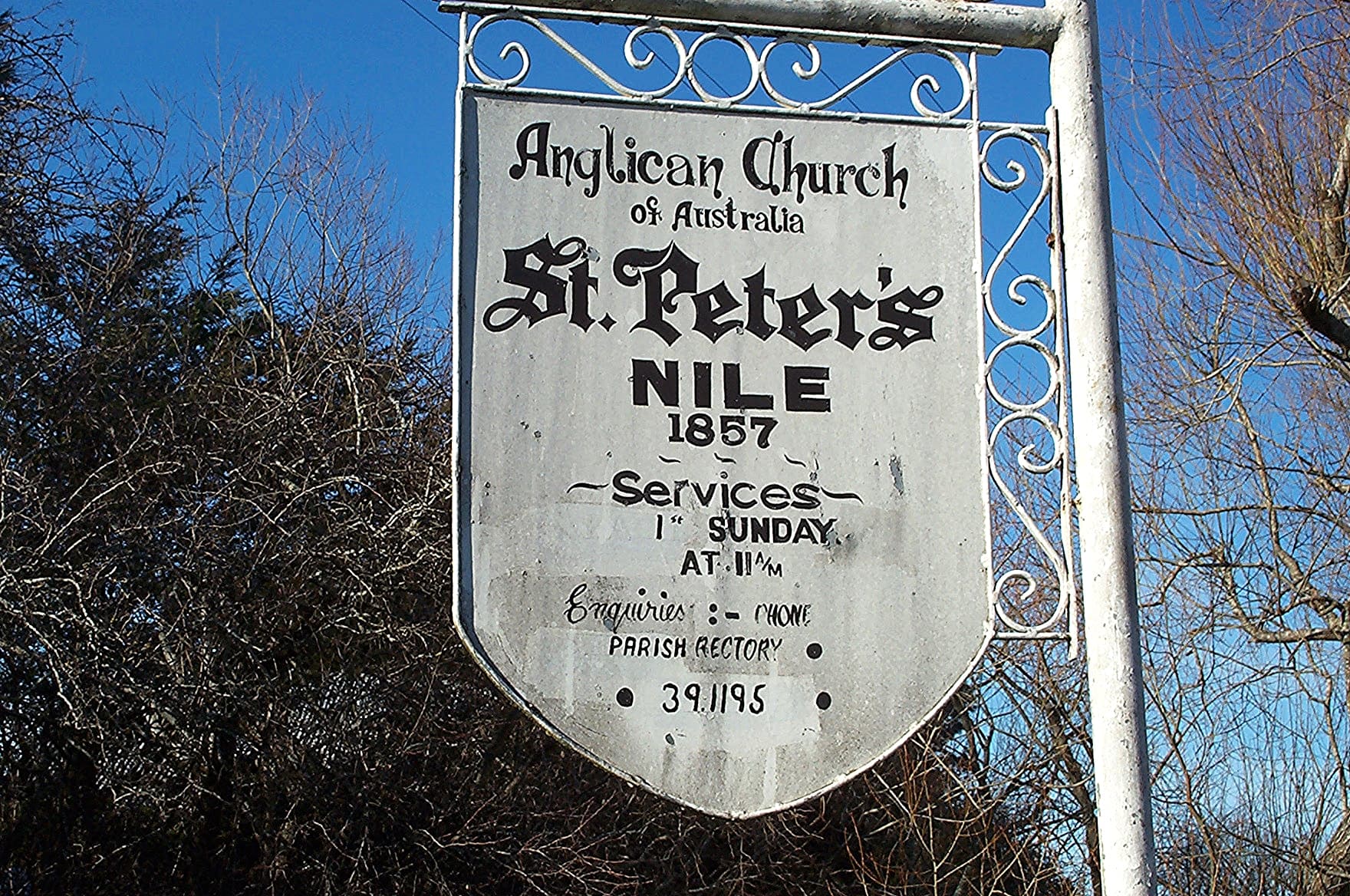
St Peter's
Nile, Tasmania
The settlement known as Nile, formerly Lymington, traces its origins to the vision of James Cox and Donald Cameron, who established it as a residential hub for their workers. Named after a...
- Denomination
- Anglican
- Region
- North
- Year Built
- 1893
- Architectural Style
- Church
- Heritage Status
- Heritage listed
Overview
The settlement known as Nile, formerly Lymington, traces its origins to the vision of James Cox and Donald Cameron, who established it as a residential hub for their workers. Named after a seaport town in Hampshire, England by Cox, the village underwent a subsequent renaming to avoid confusion with another locality. Central to the community's fabric was the church building, initially serving dual roles as both a school during weekdays and a place of worship on Sundays.
Constructed by James Cox on three acres of donated land, the church underwent significant renovations in 1893. The addition of a chancel, vestry, and tower was made possible through an endowment bequeathed by Cox himself. The culmination of these efforts culminated in the consecration of the church on St. Peter's Day in 1893, officiated by Bishop Montgomery, as chronicled in The Mercury newspaper of June 1893.
The consecration ceremony, witnessed by esteemed clergy and parishioners, unfolded with solemnity and reverence. Mr. James Cox, representing Clarendon, presented the petition for consecration to the Bishop, who, upon granting consent, proceeded to consecrate the various parts of the church in the company of the incumbent and other clergy.
St. Peter's Anglican Church holds profound historical significance as a quintessential example of colonial Georgian ecclesiastical architecture. Its construction from brick and sandstone underscores its place among Tasmania's cultural landmarks. Furthermore, the Parish Hall, constructed in brick, stands as a rare testament to architectural heritage within the region.
.
Established in the 1850s, St. Peter's Church epitomizes the pivotal role of the church as a focal point for both social and spiritual endeavors within regional communities across Tasmania. Its enduring legacy serves as a testament to the resilience and enduring relevance of faith-based institutions in shaping the cultural landscape of Tasmania.
History
1850s
St. Peter's Church established
founded1850s
Settlement established as a residential hub for workers
founded1893
Church renovated with chancel, vestry, and tower added
renovated1893
Church constructed on donated land
built1893
Church consecrated by Bishop Montgomery on St. Peter's Day
consecrated
Gallery
References
- Tasmanian Heritage Register THR ID No. 10896Tasmanian Pictorial Church Index
Links
- TASMANIAN TELEGRAMS, (1893, June 30). The Mercury (Hobart, Tas.: 1860 - 1954), p. 3. Retrieved February 9, 2023
Tasmanian Pictorial Church Index
- Tasmanian Archives, AA193/1/1612, Mercury Newspaper
Tasmanian Pictorial Church Index
- Tasmanian Archives, LPIC33/1/12, Lloyd George Webb (NG2692)
Tasmanian Pictorial Church Index
- St Peter's Church & School, Nile
Tasmanian Pictorial Church Index
Services
Not recorded
Open
Not recorded
Address
15 Church Lane, Nile TAS 7212
Contact
Not recorded
Accessibility
Not recorded